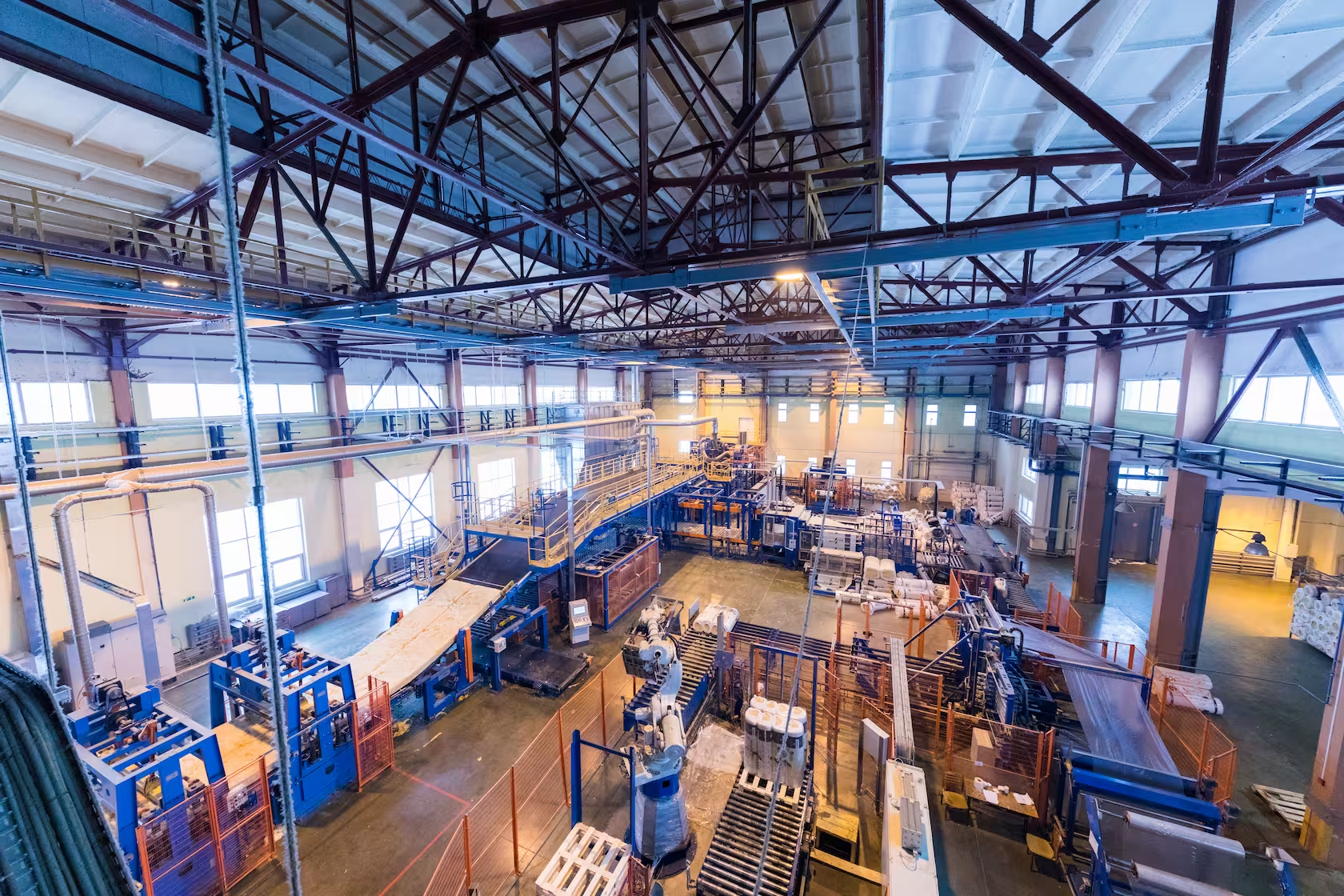
The Changing Face of Manufacturing
Manufacturing and production are undergoing major changes that affect how products are made and how businesses find manufacturing partners. Whether you're a business looking for a manufacturer or just curious about where products come from, understanding these trends helps you make better decisions.
Technology Transforming Manufacturing
Automation and robotics are changing factories everywhere. Robots now handle many repetitive tasks that humans used to do. This doesn't necessarily mean fewer jobs, but different jobs. Factories need people who can program and maintain robots rather than just operating machines.
3D printing (additive manufacturing) lets companies make complex parts without expensive molds or tooling. This is perfect for prototypes, custom products, or small production runs. What used to take weeks and thousands of dollars in setup costs might now be done in days for hundreds of dollars.
Smart factories use sensors and data to monitor every part of production. Machines can predict when they'll need maintenance before they break down. Quality problems can be spotted and fixed immediately instead of discovering defects later.
Manufacturing Moving Closer to Home
For years, companies moved manufacturing to countries with cheaper labor. Now many are rethinking this approach. Bringing production closer to customers (called nearshoring or reshoring) has several advantages.
Shorter supply chains mean products arrive faster and companies aren't as vulnerable to shipping delays or international problems. Recent global events showed how risky it can be to depend entirely on distant suppliers.
Local manufacturing also appeals to consumers who want to support local businesses and reduce environmental impact from shipping. "Made in USA," "Made in New Zealand," or similar claims can be valuable marketing points.
Sustainable and Green Manufacturing
Environmental concerns are pushing manufacturers to reduce waste, use renewable energy, and design products that last longer or can be recycled. This isn't just about being nice to the planet. Consumers increasingly choose environmentally friendly products, and regulations in many places require better environmental practices.
Circular manufacturing aims to reuse materials instead of throwing them away. Products are designed to be easily disassembled and recycled at the end of their life. Some manufacturers take back old products to recycle them into new ones.
Custom and Small-Batch Production
Mass production of identical items is giving way to more customization. Modern manufacturing methods let companies efficiently make smaller batches of products or even customize individual items.
This is great for small businesses that want unique products but don't need thousands of units. You might be able to manufacture 100 custom items almost as affordably as you used to need to order 10,000 identical ones.
On-demand manufacturing means products are made only after they're ordered rather than making thousands and hoping they sell. This reduces waste and inventory costs.
Finding Manufacturing Partners
Online manufacturing marketplaces now connect businesses with manufacturers worldwide. You can upload your product design, get quotes from multiple manufacturers, and compare options. This makes finding manufacturing partners much easier than it used to be.
Maker spaces and small local manufacturers serve entrepreneurs and small businesses. You don't need to go to China to manufacture a product idea anymore. Local options might cost more per unit but offer smaller minimum orders, faster communication, and easier quality control.
Contract manufacturers produce products for other companies. If you have a product idea but no factory, contract manufacturers handle production while you focus on design, marketing, and sales.
Quality and Compliance Considerations
Quality control standards are becoming more important as supply chains get more complex. Certifications like ISO 9001 show that manufacturers follow established quality processes. If you're sourcing manufactured products, ask about quality certifications.
Safety and compliance regulations vary by industry and location. Manufacturers must meet standards for their products, especially in industries like food, medical devices, children's products, and electronics. Make sure any manufacturer you work with understands regulations for your market.
What This Means for Businesses
Start small when developing products. Modern manufacturing methods let you test ideas with small production runs before committing to large quantities.
Location matters less than it used to, but consider the full picture. The cheapest per-unit cost isn't always the best deal when you factor in shipping, communication challenges, quality issues, and long lead times.
Communication is crucial with manufacturing partners. Make sure they understand your requirements completely. Samples and prototypes before full production prevent expensive mistakes.
What This Means for Consumers
More choices are available than ever before. Custom and small-batch manufacturing means you can find more unique products instead of just mass-produced items everyone else has.
Local manufacturing options are growing in many areas. If you value locally made products, there are increasingly more options to choose from.
Understanding manufacturing helps you appreciate product pricing. When you know what goes into making something, you can better evaluate if a price is reasonable or if a suspiciously cheap product probably cut corners on quality or ethics.
Learn More: